
Spiritual Life and the Body
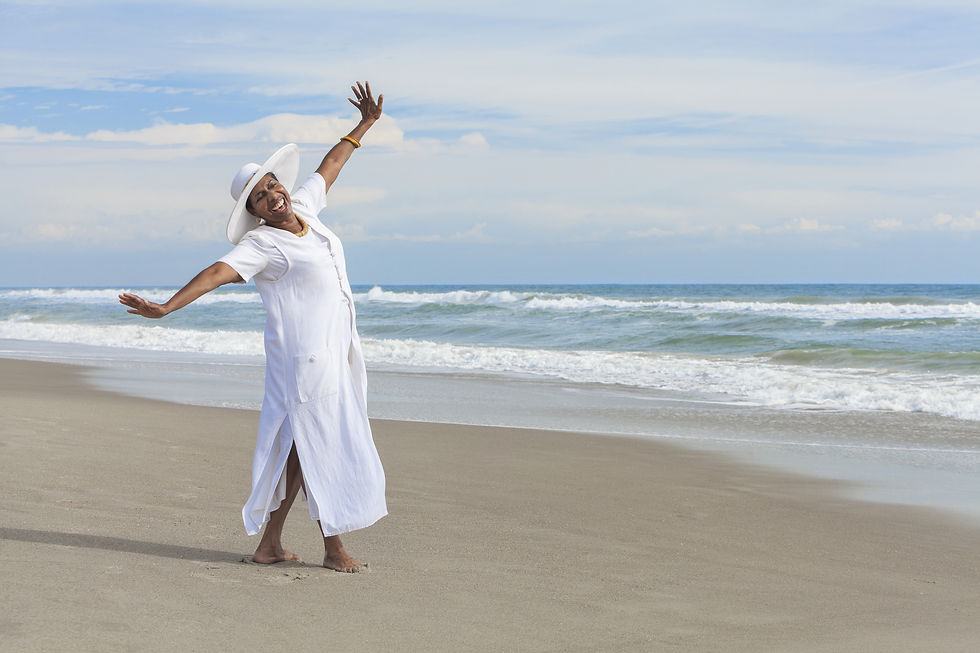
There are seasons in the spiritual life when we begin to notice how subtly we have divided ourselves. We speak of “my soul” as though it were somewhere above or within us, watching our bodily life from a distance. We pray from the neck upwards. We seek transformation through insight alone. And yet, when we grow still enough, we discover that there is no soul floating free of flesh and bone. There is only this living, breathing human being — pulse, memory, sensation, longing — the ensouled body and the embodied soul. Wholeness is not achieved by transcending the body, but by returning to it.
The Inherited Split
The separation of soul and body is rarely something we consciously choose. It is inherited — culturally, theologically, psychologically. In the modern West, spirituality easily becomes abstracted: an interior life of thought, intention, belief. Even contemplative practice can subtly reinforce the idea that we rise above the body in order to meet God. The body becomes backdrop. Or obstacle. Or at best, container.
Yet the spiritual traditions themselves speak otherwise when we listen carefully.
In the Genesis story, the human being does not possess a soul. The human being becomes a living being when breath — ruach — is breathed into earth. Dust and breath are not rivals. They belong to one another. The animation of God is not added to the body; it is what makes embodied life possible. Our small breath participates in a greater breathing. Each inhalation and exhalation is already communion.
We pray through breath.
Not as technique, but as participation. The rhythm that sustains us moment by moment is not self-generated. It is received. To notice the breath is to notice that life is being given. The body does not interrupt prayer; it enacts it.
An Inherited Confusion
Over time, Christian language has sometimes sounded as though the body were the adversary of the spiritual life. Phrases such as “sins of the flesh” have been heard as condemnations of embodiment itself. Yet the New Testament’s critique is not of muscle and bone, but of a contracted way of being — what Paul names sárx, often translated as “flesh.” He is not speaking of the body (sôma), but of the small, self-enclosed orientation that turns in upon itself. The body is not the problem. It is the place of incarnation.
When this distinction is lost, the consequences are subtle but significant. Fatigue becomes moral failure. Sexuality becomes suspect. The body’s limits are met with impatience rather than compassion. Intense emotion is mistrusted instead of listened to.
Psyche and Soma
From a depth-psychological perspective, psyche and soma are not two separate substances interacting from a distance. They are two aspects of one living process. What we cannot think, we often carry in sensation. What we cannot yet speak, we may express in posture, breath, tension, or collapse. The unconscious does not hover somewhere above us; it is lived through us.
And yet the body is not only the bearer of what has been wounded.
It is also the bearer of revelation.
Consolation is felt warmth in the chest, a softening in the belly, tears that come unbidden. Discernment often arrives not as an argument but as a settling, or an unease, that gradually clarifies. Forgiveness is not merely a decision; it is the slow regulation of a system that no longer needs to defend itself so fiercely. Even trust in God has a somatic dimension — a loosening of the jaw, a deeper exhale, a capacity to rest.
What if the body is not an obstacle to spiritual life,
but the only place spiritual life actually happens?
Not as slogan, but as lived reality.
We pray through breath.
We forgive through the softening of defended muscles.
We discern through felt-sense.
We encounter grace through sensation and affect.
The body carries wound, yes. Trauma, fear, shame, the memory of what was too much or too little. But it also carries resilience, rhythm, and a deep movement toward wholeness. It carries delight. It carries desire for communion. It carries the capacity to open, to sing, to embrace, to weep. It carries the imprint of having been breathed into life.
Perhaps wholeness is less about integrating body and soul, and more about recognising that they were never divided. The division lives in our thinking. The unity lives in our being.
Attentiveness to Incarnation
If we stay with the body long enough, without trying to correct or spiritualise it, something shifts. What first appears merely biological begins to reveal its depth. Breath is not simply oxygen exchange; it is participation. Tears are not weakness; they are release. Even trembling, at times, is the nervous system returning to equilibrium.
The body knows how to move toward life.
Long before we have language for God, we have sensation. Long before we form belief, we are held, fed, soothed, startled, steadied. Trust and fear, safety and threat, attachment and rupture — all are registered in the body. The body is the first place we learn what relationship feels like.
Those early patterns do not disappear. They become the living pathways through which we experience connection itself. And it is through these same embodied pathways that we encounter God.
Our experience of the Holy is never abstract. It is mediated through psyche and nervous system. We do not meet God outside our humanity; we meet God within it. The meeting happens in the body.
When spirituality becomes disembodied, we risk mistaking dissociation for transcendence. We may feel peaceful, but it is the peace of numbness. We may feel surrendered, but it is collapse. We may believe we are resting in God, while our body remains braced and vigilant. Without a gentle awareness of embodiment, we can unintentionally sanctify our defences.
Yet the answer is not to become preoccupied with bodily states, nor to reduce spiritual life to regulation. The body is not a project to manage. It is a living expression of the soul’s movement. To attend to the body in the spiritual life is not to turn away from God, but to notice where God is already meeting us.
The mystics understood this, often more intuitively than conceptually. Their language is full of heat, sweetness, hunger, ache, piercing, fire. These are not metaphors imposed upon experience; they are descriptions of it. Divine encounter is not abstract. It is felt.
There are moments in prayer and life when the body widens — when joy rises unexpectedly, when grief breaks open into tenderness, when love feels almost too much to contain. There are moments of stillness so full they seem luminous. The body does not merely tolerate such moments. It participates in them.
If we dare to trust this, something quiet is restored.
We no longer need to climb out of ourselves to reach God. We do not need to split off the inconvenient or the vulnerable. The very ground of encounter is here: in breath, in pulse, in the warmth of a hand held beside a hospital bed, in the ache of love that cannot fix what it longs to protect.
Wholeness is not an achievement. It is a remembering.
And perhaps spiritual maturity is not about rising above the body, but about inhabiting it more truthfully — allowing the small breath we carry to align, again and again, with the greater Breath that carries us.
We no longer strive to become spiritual beings.
We consent to being human ones.
We allow the breath that sustains us to be enough.
As you read these words, notice your breath.
Not to change it.
Simply to receive it.
The life within you is not separate from the life of God.
It never was.


